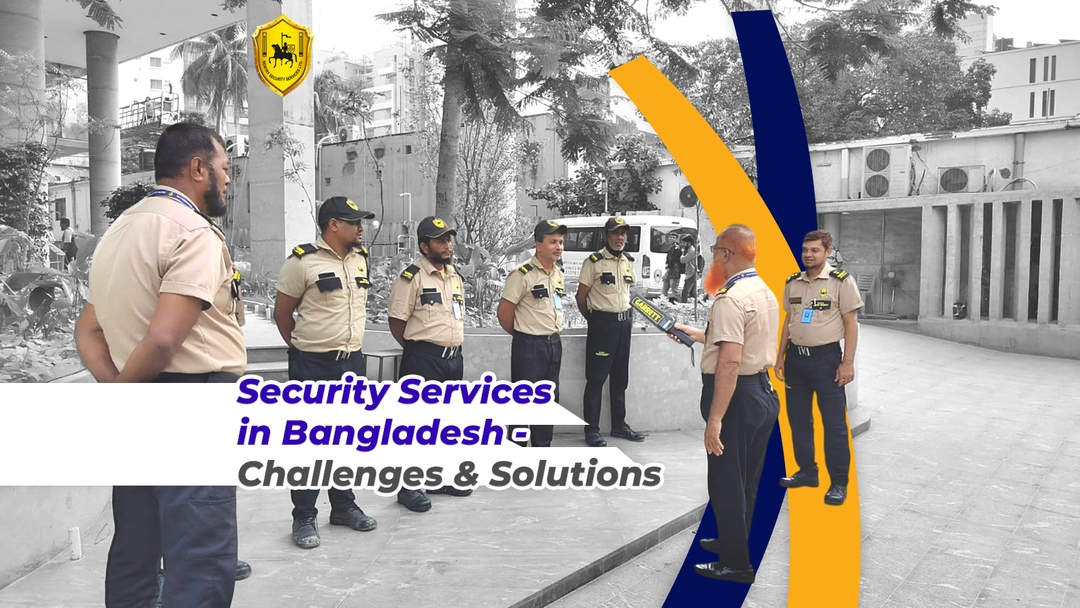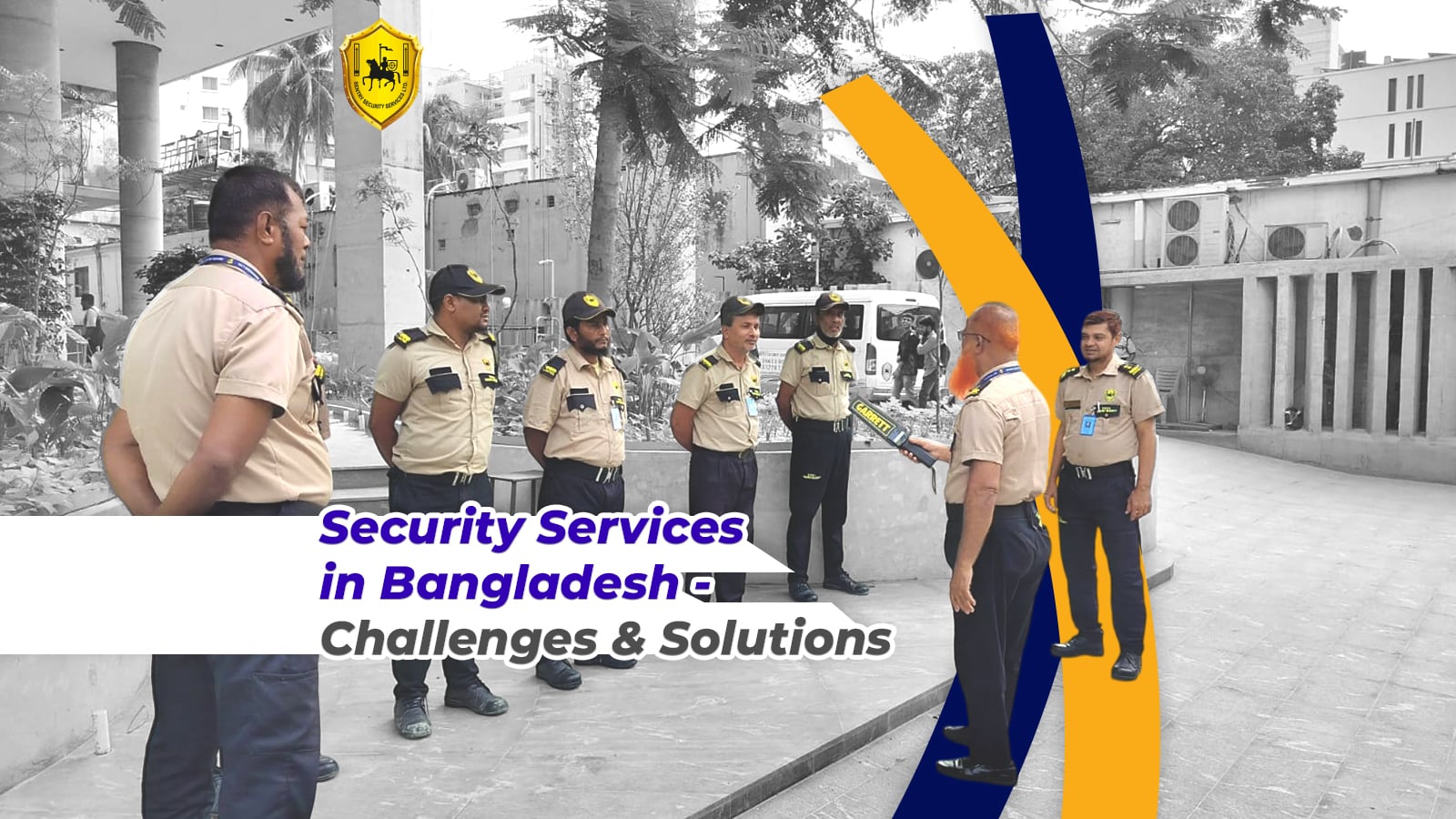
Challenges and Security Service Solutions in Bangladesh 2026
In the small hours of a June night in 2025, a gang climbed the back gate of a garment factory in Ashulia. They tied up two machine operators, then the two guards on duty, and loaded roughly ten tonnes of fabric and five tonnes of yarn onto two waiting trucks. According to The Business Standard, the haul was worth about Tk1.06 crore. The guards were on site. They were simply outnumbered and unready.
That distance, between posting a guard and actually being protected, sits under almost every case below.
Security service solutions in Bangladesh have stopped being a formality you tick off for an insurer. Banks, hospitals, factories, warehouses and small shops are all being hit, and the incident reports tend to rhyme: a guard overpowered, a fire nobody caught in time. This article looks at what keeps going wrong, then at what trained security actually changes.
What Is A Security Service?
A security service is the organised protection of a place, the people in it and the assets it holds, delivered by trained personnel and the systems behind them. Most of the work is prevention through visible presence. The rest is trained response for the moment prevention fails.
A watchman dozing on a plastic chair is not that. The gap between the two shows up precisely when a site is tested, and the cases further down make the point better than any definition can.
The Main Types Of Security Guard Services
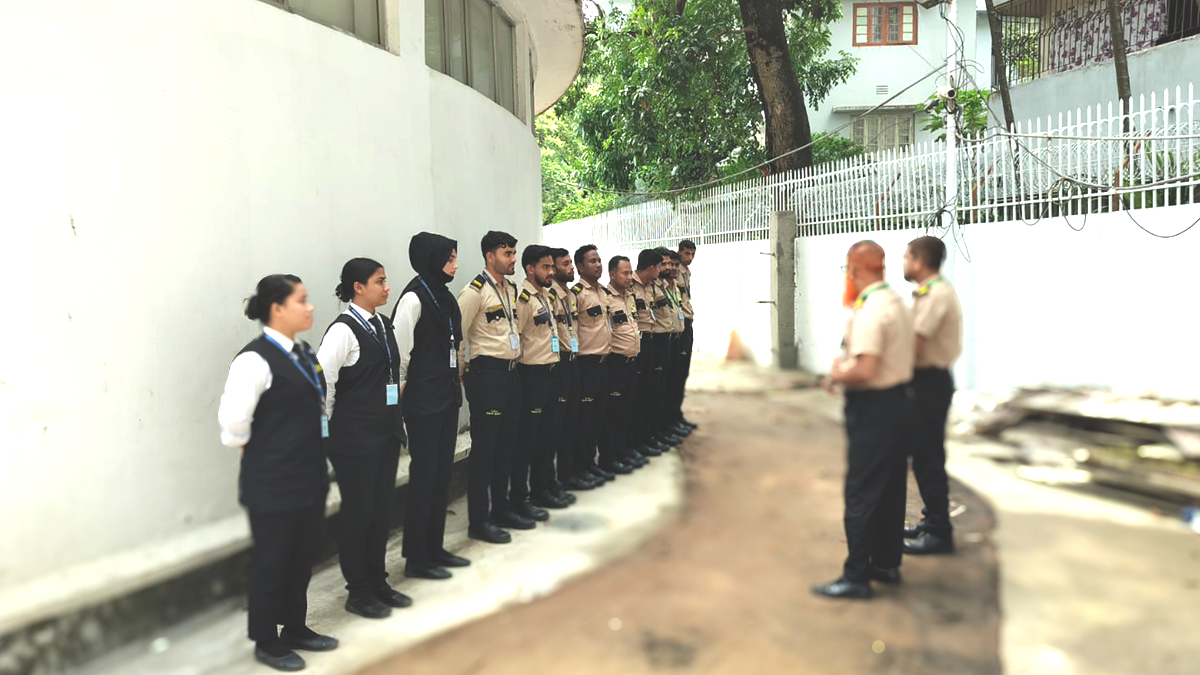
Most premises run on unarmed guarding: a manned gate, patrols, entry checks and an eye on the CCTV. Armed security guard services sit a tier above, for banks, cash handling, vaults and other high-value targets where the threat is violent and organised.
Around those two sit mobile patrols, control-room monitoring, access control at entry and exit, cash-in-transit escort and event cover. The right mix depends on the site. The common ingredient is training, not the uniform.
The Security Challenges Facing Institutions In Bangladesh
Read a year of Bangladeshi crime and fire reporting and the same patterns keep surfacing. Here they are, with the cases that show them.
Robbery And Dacoity At Factories And Warehouses
Industrial sites are soft targets: large, set back from the road, full of movable stock and guarded thin. In July 2025, The Business Standard reported that fifteen to twenty masked men walked into the HAMKO facility in Bagerhat at around 8pm, threatened the lone security guard with weapons and carried off raw materials worth more than Tk1 crore.
The Ashulia raid that opens this article ran on the same script months later, only bigger. Guards tied, two trucks loaded, everything gone before dawn. Neither site lacked a guard. Both lacked a guard force that could hold the line.
Banks, Atms And Financial Services Under Pressure
Cash points draw the most determined attacks, and the guards there take the worst of it. A report in Somoy News on 16 August 2025 described how, in a single night in Patuakhali, robbers entered the Dutch-Bangla Bank Fast Track ATM booth on Sadar Road at around 3:30am, beat the security guard, tied him with a blanket and left him in a dark room, then smashed the cash machine and took the office laptop. The guard, Mujibur, went to hospital with a head injury.
Bank branches are not safe simply for being banks. According to Prothom Alo, in April 2024 armed members of the Kuki-Chin National Front seized the manager of the Sonali Bank branch in Ruma, Bandarban, from a mosque during Esha prayers, then broke into the branch, forced a vault and took the cash. They had already overpowered the police and Ansar members in the area and stripped them of their weapons. The manager was carried off with them.
Mobile money is a target now too. As The Business Standard reported, a bKash agent in Dhaka’s Adabor was hacked with a machete and robbed of Tk3 lakh and his transaction phone, and when police moved in to arrest the gang the raid became a machete fight that left an officer-in-charge and a sub-inspector injured. Whether the money sits in a vault, a cash machine or an agent’s drawer, the weak point is the same: whoever is standing in front of it.
Fire At Industrial And Institutional Sites
Fire is the other half of the problem, and it needs no gang. A short circuit, some stored chemicals and nobody watching will do.
The costliest example is the airport. Al Jazeera reported that a fire tore through the import cargo area of Dhaka’s Hazrat Shahjalal International Airport on 18 October 2025, gutting stored raw materials, apparel and samples, with a BGMEA director estimating losses could run as high as $1bn. Nor was it a one-off. The Daily Star’s Bangla edition reported a second fire at the same cargo terminal on 6 June 2026, brought under control that time in about a quarter of an hour.
Factories carry the same risk, and it is spread across the country.
In July 2026, The Business Standard reported that a warehouse of the Globe Safety Factory in Gazipur’s Board Bazar was gutted, with firefighters taking more than two hours to bring it under control.
Earlier that year, Prothom Alo carried an account of a snapped electric wire falling onto the tin roof of a jute godown in Saltha, Faridpur, on 27 March 2026, burning about 350 maunds of jute and two neighbouring shops, a loss the owner put at around Tk30 lakh. Traders blamed wiring strung haphazardly over the shops.
Hospitals are no exception, and there the stakes are patients on the table. Bangladesh Sangbad Sangstha reported that a short circuit in a third-floor store room at Khulna Medical College Hospital on 20 May 2026 spread to an air-conditioning unit and then an oxygen line, blew a door open and filled the operating area with smoke. At least five people were hurt, patients were rushed out in panic, and with the oxygen supply cut, surgery stopped. A guard trained to spot a fault early, and a fire drill people had actually practised, is what separates a controlled evacuation from that.
When The Threat Reaches The High Street And The Home
Organised crews rarely hit one target and go home. On that same night in Patuakhali, Somoy News reported, the gang that beat the ATM guard also broke the locks of two shops on Sadar Road and took cash, monitors and stock, one owner losing around Tk2 lakh. A single shutter and no night guard is an invitation.
Homes are not spared either. The Daily Star reported a night raid on a Dhaka house in which around thirteen armed men broke in, tied up the head of the household, forced the keys from him and cleared cash and valuables worth about Tk1.7 lakh in roughly half an hour. The method barely changes from a factory floor to a family home. Control the people, take the keys, empty the place, leave. What changes the outcome is whether trained security stands between the gang and the door.
What The Incidents Have In Common
Take away the locations and the numbers and one thing repeats in nearly every case. The security on site could not stop what happened.
Guards were present at Ashulia, at the Patuakhali ATM booth and at the Ruma bank compound. They were tied up, beaten or disarmed, because they were too few, untrained for a violent gang, or left standing without a plan. Where fire was the threat, the failure came earlier and quieter: an unwatched short circuit, chemicals stored where they should not be, nobody trained to catch the first minute of a blaze. Access was the other weak point, a back gate climbed in Ashulia, a shutter cut in Patuakhali, a roof used to get into more than one building.
None of that is bad luck. It is the predictable result of treating security as a cost to shave rather than a job to do properly. That is exactly where the solutions begin, and where the second half of this article picks up.
Why Security Service Solutions In Bangladesh Matters More Than Ever
The targets have widened. It is no longer just jewellers and money-carriers. In the cases that follow, the victims include a bKash agent, a hospital operating theatre, an airport cargo shed holding a chunk of the country’s exports, a jute godown and a Dutch-Bangla ATM booth. The people responsible for protecting these places, procurement officers and facility managers, are now dealing with organised gangs, opportunist thieves and plain electrical neglect, sometimes in the same week.
Two things are driving it. Crime is better organised and better armed than it was. And the buildings themselves, tall factories, dense markets, chemical stores packed beside garment floors, fail faster when something goes wrong. A sleepy gateman cannot close that gap.
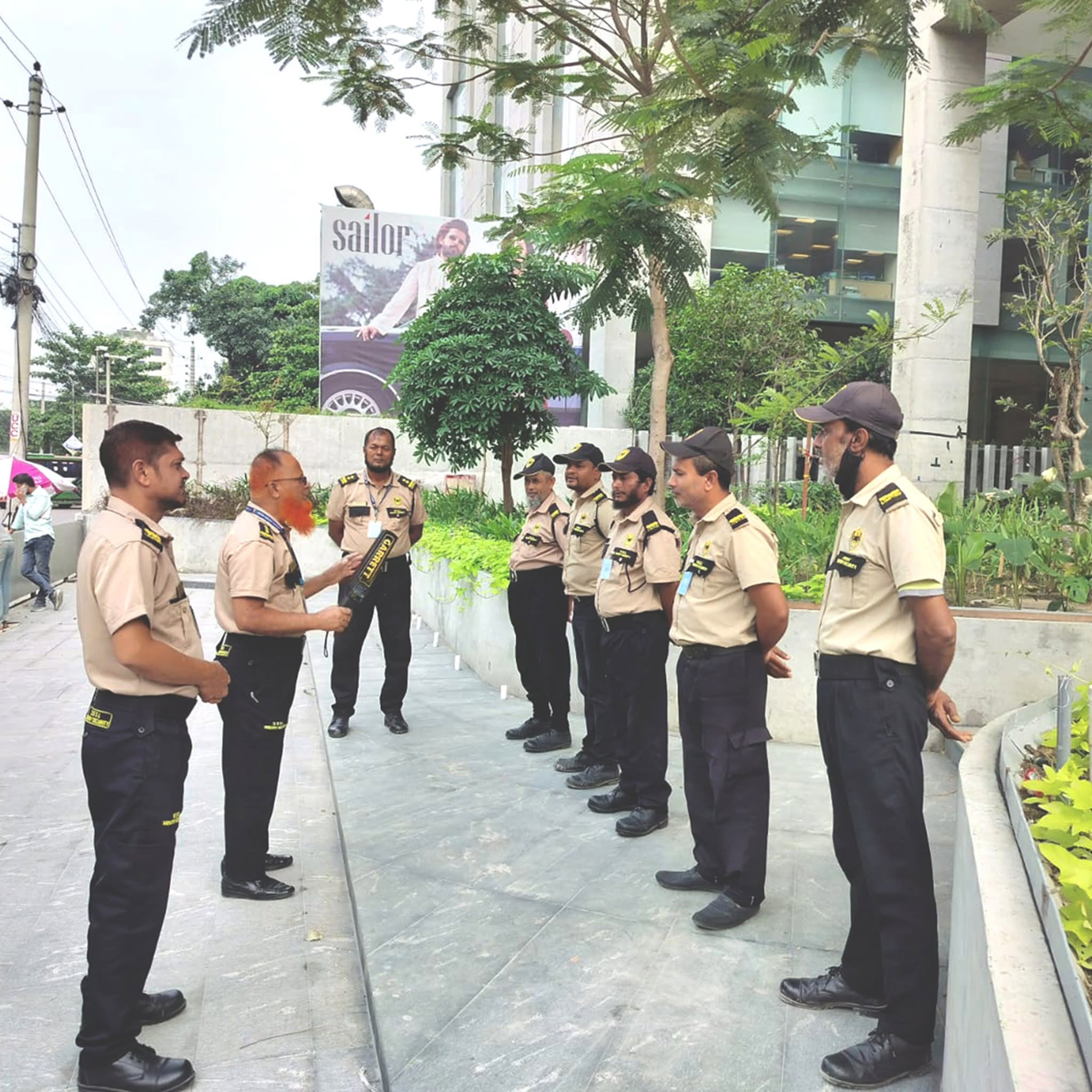
How Trained Security Services Reduce The Risk
None of the failures above is mysterious, and neither are the fixes. Each pattern in the cases points straight at the thing that would have changed the outcome.
Trained Guards, Not Untrained Watchmen
The person on the post is the biggest single variable. At Ashulia, at the HAMKO factory and at the Patuakhali ATM booth, a guard was present and a guard was overpowered. What was missing was training and numbers: someone drilled to read a threat early, raise the alarm, hold a position and follow a plan, backed by enough colleagues that a gang cannot simply tie up the one man on duty.
A trained guard is vetted before hiring, taught how to respond and checked while on the job. A watchman taken off the street for the lowest wage is none of those things, and it shows the moment a site is tested.
Armed Security Guard Services For High-Risk Sites
Some targets are worth enough to attract armed, organised gangs, and against those an unarmed guard is a witness, not a defence. Banks, cash-in-transit, vaults and high-value stock are exactly the sites the cases above kept naming, from the Ruma branch to the bKash agent in Adabor.
Licensed armed security guard services exist for these postings. A trained armed guard is first a deterrent, since most gangs pick the softest target available, and second a real obstacle when deterrence is not enough.
Access Control, Patrols And Surveillance
Look again at how the raids got in: a back gate climbed in Ashulia, a shutter cut in Patuakhali, a roof used to reach more than one building. Access is where most of them were beaten. Controlled entry and exit, visitors logged, roving patrols on an irregular pattern and CCTV watched by someone who will act on it to close those gaps. A camera nobody is watching only records the crime. A guard on patrol prevents it.
Fire Watch And First Response
The fires in these reports had one thing in common. They were small for a minute, and that minute was wasted. The airport cargo blaze, the Khulna hospital short circuit and the Faridpur godown all grew because nobody trained was watching the first sign.
A guard drilled in fire watch checks for the fault before it spreads, knows how to use an extinguisher, runs the evacuation and calls the fire service without hesitating. On a chemical-heavy or oxygen-fed site, that early minute is the whole game.
Supervision And Accountability
A guard force is only as good as the management behind it. Rosters that are actually enforced, supervisors who spot-check posts, incident logs, a clear chain of command and someone answerable when standards slip: none of that comes with a watchman hired informally by a caretaker. This is the quiet reason a managed security company outperforms a freelance arrangement, long before anything dramatic happens.
Choosing a Security Service Company In Bangladesh
If the cases teach one buying lesson, it is that the cheapest quote is rarely the best security service. The saving almost always comes out of training and supervision, the two things that failed in nearly every incident above.
A few things separate a serious provider from a nameplate. Look for proper licensing and ISO certification, not just a claim of it. Ask how the guards are trained and who trains them, because a company with its own training programme controls the standard rather than hoping the market supplies it. Check the reach, since a firm that already covers your districts can post and supervise reliably. Weigh the client list, as embassies, banks and industrial sites do not stay with a provider that fails them. And confirm the firm can supply armed guards where the risk calls for it, under the right licences.
How Sentry Security Services Ltd & Training Center can help
Sentry Security Services Ltd is one provider that fits that description. It is considered as one of the best best security service solutions in Bangladesh. Operating since 1995 and ISO 9001:2015 certified, it fields thousands of trained guards across all 64 districts, trains its own personnel at its in-house training centre, and protects embassies, UN bodies, banks and industrial sites. For a business weighing the risks in this article, it is a credible place to start the conversation.
Frequently asked questions
What Is A Security Service?
A security service is the organised protection of a site, its people and its assets by trained guards and the systems that support them, including access control, patrols, CCTV monitoring, fire watch and armed cover where the risk demands it. The aim is to prevent incidents first and respond properly when prevention fails.
What Do Armed Security Guard Services Include?
Armed security guard services place licensed, firearm-trained guards at high-risk sites such as banks, cash-in-transit routes, vaults and high-value premises. Beyond carrying a weapon, the role covers deterrence, access control, escorting valuables and a trained response to a violent, organised threat.
How Do Trained Guards Help Prevent Theft, Robbery And Fire?
Trained guards catch problems early. They read a developing threat, control who enters, patrol on an unpredictable pattern and raise the alarm before a situation turns. On fire, a guard trained in early detection and evacuation buys the minutes that decide whether a blaze is contained. Most of the incidents in this article turned on that early minute being missed.
What Should You Look For In A Security Service Company In Bangladesh?
Check for real licensing and ISO certification, a proper in-house training standard, coverage in your area, a track record with serious clients and the ability to supply armed guards where needed. Treat the lowest bid with suspicion, since the cut usually lands on training and supervision.